
How to Reduce EMS Overtime
EMS overtime rarely arrives by surprise. It grows from gaps that someone found too late. These steps help supervisors see and fill gaps before they harden into mandatory holdovers.
Why EMS overtime keeps growing
Mandatory holdovers have a way of feeling inevitable. A medic calls out, the crew on duty stays late, and the same thing happens again next month. But overtime like this usually traces back to a gap that nobody saw until the last moment.
That is good news. A gap you see early is a gap you can fill with straight-time staff.
Start with the right EMS shift pattern
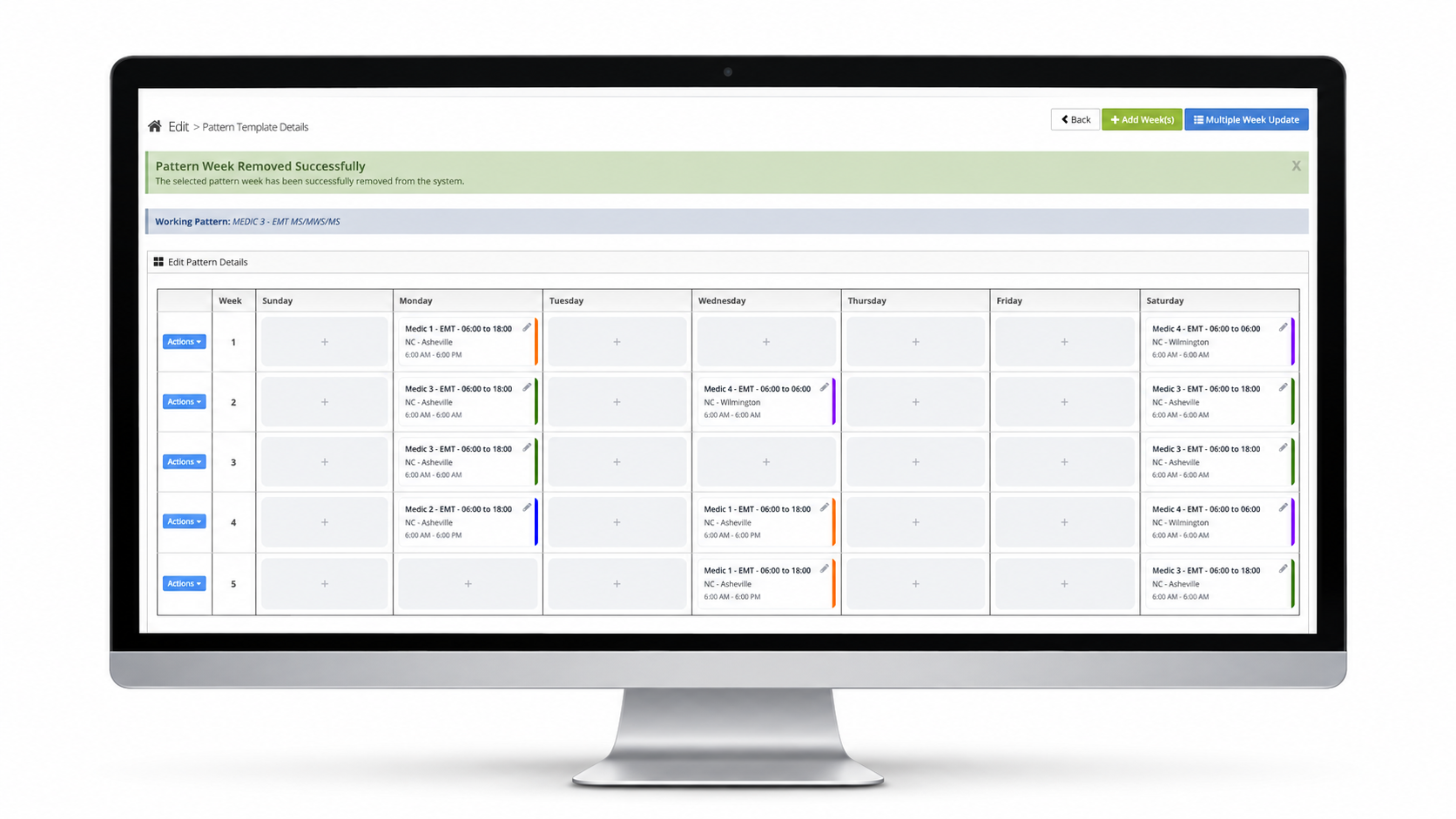
Pick a rotation (24/48, 48/96, Kelly, 3/2) that matches your call volume and staffing levels. Then build the pattern once and let it repeat.
A repeating pattern shows coverage holes weeks ahead instead of the night before. That lead time changes everything.
Fill open shifts fairly and fast
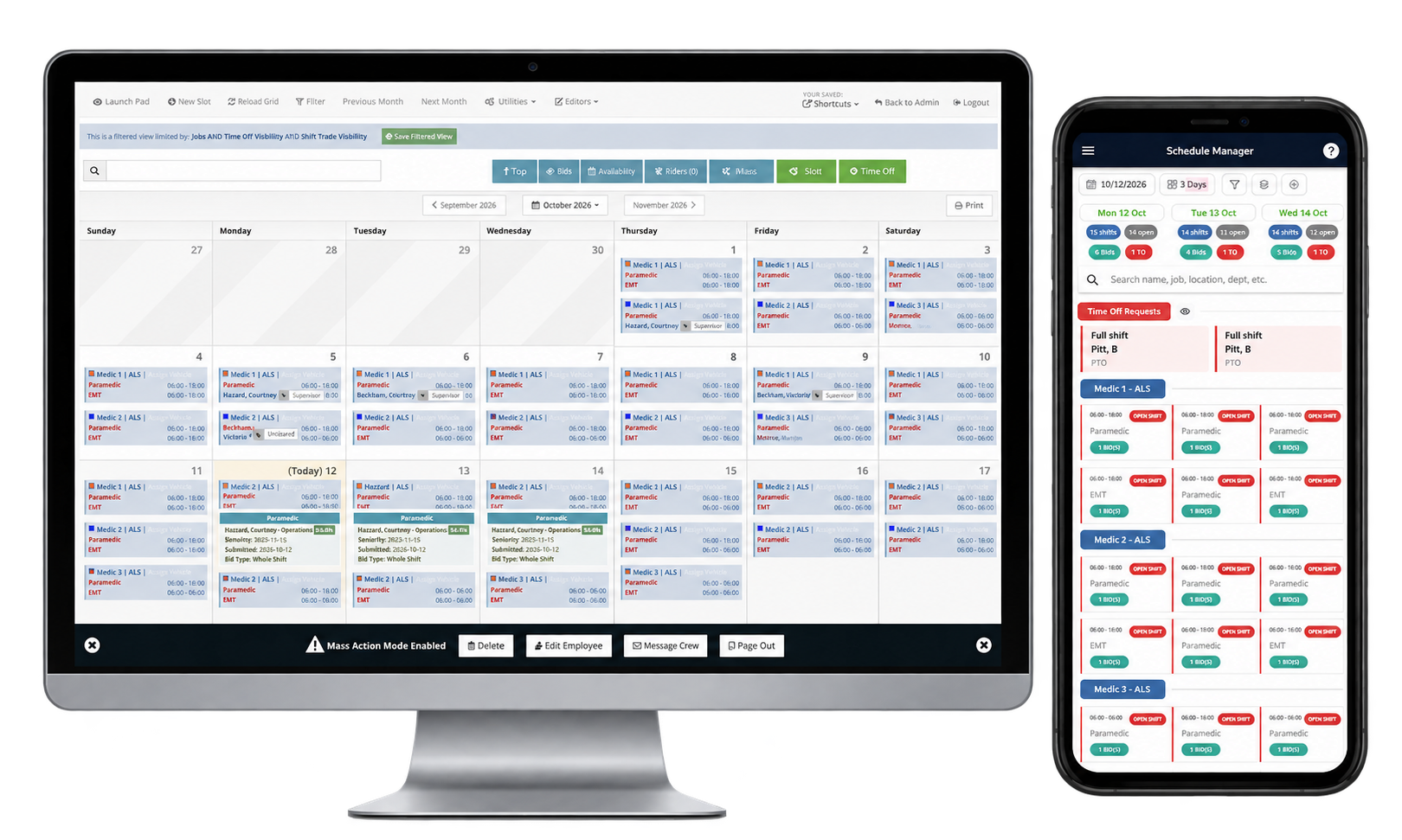
Post open shifts where every qualified employee can see and request them. Then approve pickups in the order of rules you set, such as seniority or hours worked, so you offer shifts to straight-time staff first.
Control shift trades and time off
Trades need supervisor approval. Without it, a friendly swap can push someone over their hours. Track time-off balances and requests in one place too, so every approval accounts for coverage.
Watch hours as they happen
Compare scheduled hours with clocked hours each pay period. Flag employees who are close to overtime thresholds before you assign them extra shifts, not after.
Illustrative example: a 24/48 agency short two medics
Two paramedics go on leave, leaving four 24-hour shifts open in the next pay period. The scheduler posts each opening with the required role and certification, so only eligible staff can request it.
The scheduler reviews employees already near their overtime threshold last, and approves part-time staff with open availability first. The result: staff with remaining straight-time hours cover the openings, and nobody gets a mandatory holdover.
Numbers worth checking every pay period
Track open shifts posted versus filled before the shift starts, and the average time from posting to fill. Watch overtime hours by station and by role. Then use the free Staffing Calculator to test whether your current headcount can cover your rotation without overtime.
Overtime control comes down to timing: see the gap early, offer it fairly, and watch the hours as they accumulate. VAIRKKO Scheduling puts those steps in one place.