
How Training, Certifications, and Compliance Work Together in VAIRKKO
Training lives in one place and credentials in another, and the gap between them is where lapses hide. In VAIRKKO, Education and Certifications share a single employee record, so assigning learning, recording completion and reviewing credential requirements happen in one connected flow.
Why training and credentials belong on one record
Ask a training officer where an employee's refresher course stands and you will get an answer. Ask where that same employee's credential stands and you will probably get a different person, a different system and a pause. Training and certifications usually live apart. The cost shows up late, often at the worst moment, when a schedule needs someone qualified and nobody can say for certain who that is.
VAIRKKO closes the gap. Education and Certifications share the same employee record, so assigning learning, recording completion and reviewing credential requirements all happen in one connected flow.
Education tools: eLearning, classroom training and skills testing
Education covers the learning itself, and it comes in four forms.
eLearning lets you assign online courses with due dates. Employees complete the courses, and any tests, inside VAIRKKO. Classroom Training handles the in-person side: you schedule sessions, take registrations and record attendance. Skills Testing covers hands-on evaluation, and the results stay with the employee's training record.
Prebuilt Courses round out the set. Add-on prebuilt courses, such as courses from 911 eLearning Solutions, are available for purchase and get assigned like any other course.
Certification tools: tracking, roadmaps, compliance rules and training hours
Certifications handles the credential side. Employees upload their credentials, administrators review them, and VAIRKKO tracks the expiration dates, so nobody has to keep a calendar in their head.
Certification Roadmaps let you assign a roadmap by role, so every employee knows which training and certifications they need. Compliance Rules go a step further. You set requirements and deadlines, then review who is missing a certification or holds an expired one. Training Hours works the same way for time: you set the required hours and record completed training against them.
A practical example: one refresher course, start to finish
Start with a refresher course. An administrator assigns it in eLearning and sets a due date. The employee finishes the course and the test, and VAIRKKO records both the completion and the training hours.
Next, the administrator opens the employee's roadmap. Which credential requirements are complete? Which are still outstanding? The answer sits in the same record.
Then Compliance Rules do their quiet work. They flag anyone whose required certification is missing or expired, so the team can follow up before it affects scheduling. That last step matters most. A flag on Tuesday beats a staffing scramble on Friday.
Training hours vs. qualifying continuing education
Be careful here, because the two ideas sound alike. Recorded training hours are a record of the training an employee completed in your organization. That is all they are.
Whether those hours count as continuing education toward a state or national renewal depends on two things: the course provider's accreditation and the certifying body's rules. A completed course does not settle the question on its own.
Before you count hours toward a renewal, check the provider's documented accreditation information. The free CE Calculator can help you estimate what remains.
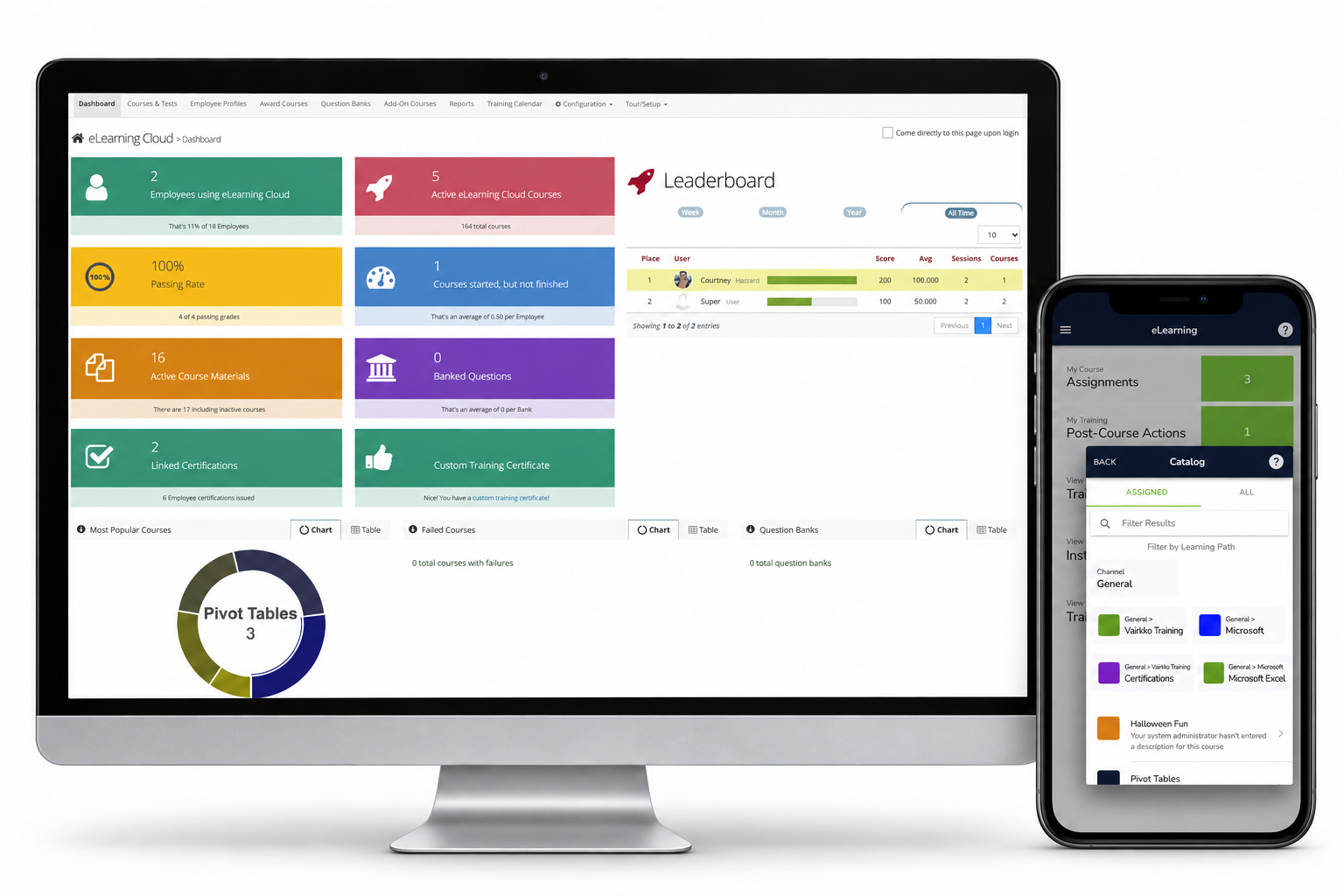
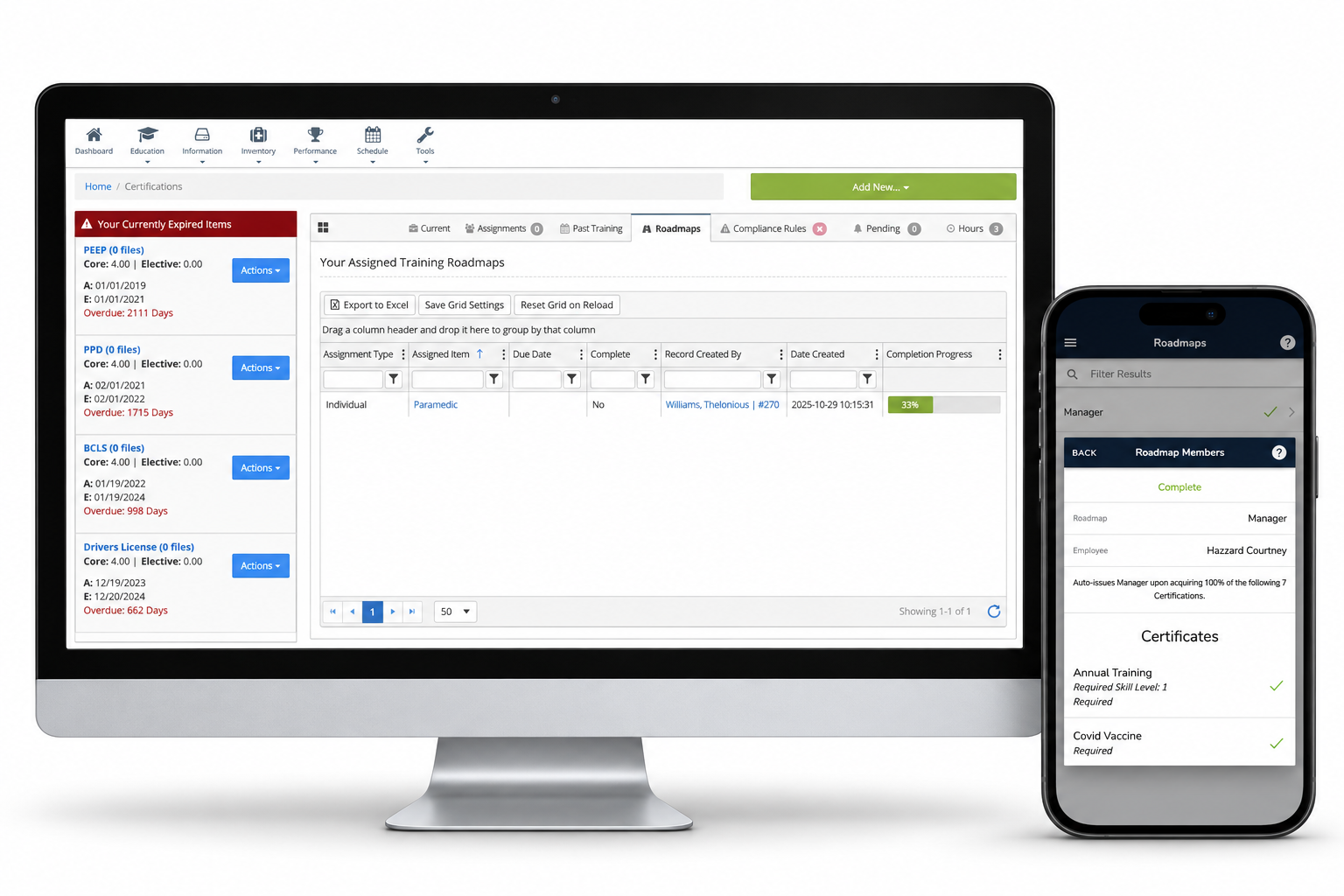
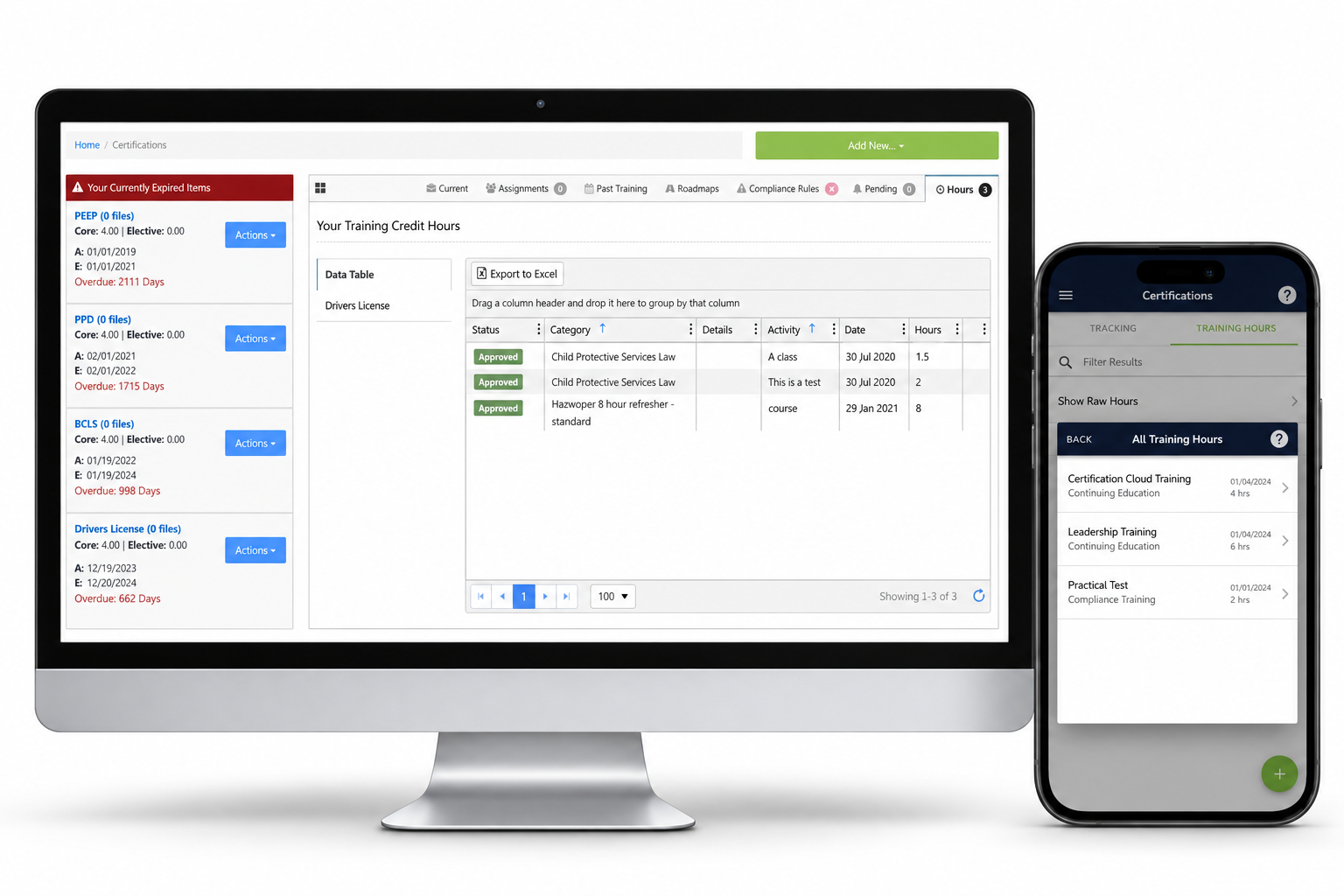
Education keeps the learning moving. Certifications keeps credentials current. Compliance Rules show you where the gaps are. All three work from the same employee record, so nobody has to reconcile two systems to answer a simple question.